
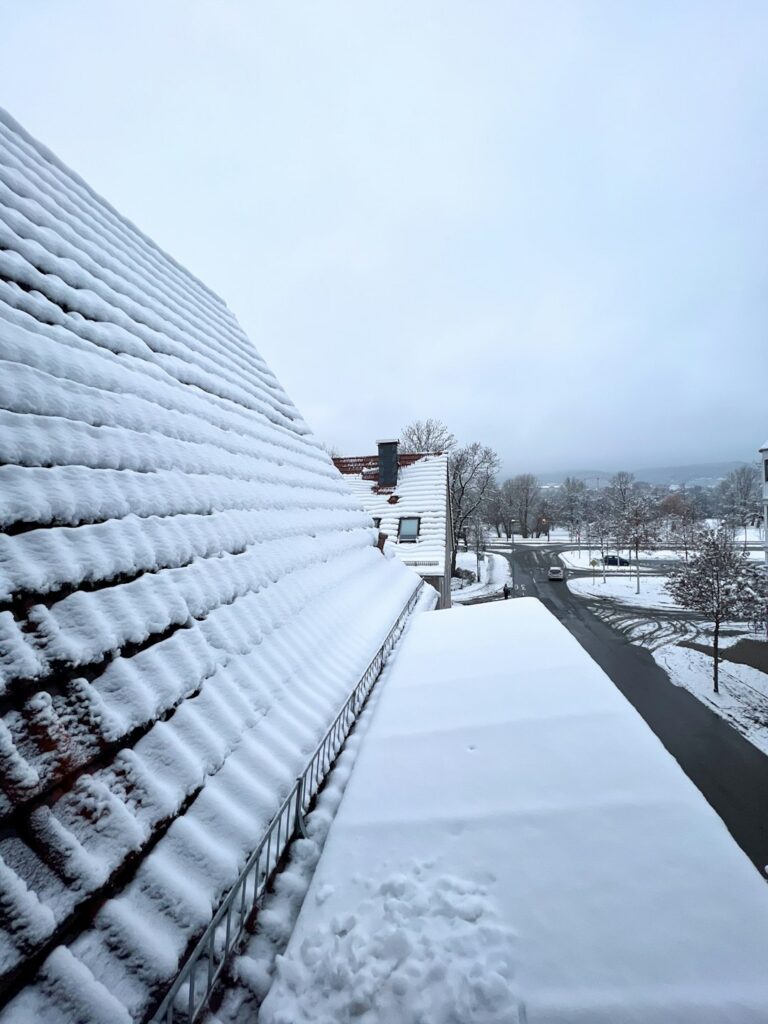
Winter weather can expose small roof problems before they become expensive interior damage. In Dundee, NY, homeowners should prepare for a combination of snow, freezing temperatures, wind, ice, and repeated thawing and refreezing.
A careful inspection in fall, followed by a few practical maintenance steps, can improve the roof’s ability to shed water and support winter conditions.
What should be checked before winter?
Before snow arrives, inspect the roof from the ground and examine accessible areas inside the attic. Look for missing, lifted, cracked, or damaged shingles; exposed fasteners; loose flashing; sagging rooflines; and areas where leaves or branches have collected.
Binoculars can help identify problems without climbing. Roof surfaces become slippery quickly in cold weather, and walking on a roof can damage aging shingles or create a fall hazard.
From the ground, pay particular attention to:
- Shingles that appear curled, buckled, blistered, or noticeably darker than surrounding areas
- Flashing around chimneys, plumbing vents, skylights, and roof edges
- Gutters that are pulling away from the fascia
- Excessive granules in gutters or at the base of downspouts
- Sagging areas or visible depressions
- Tree limbs that extend over or touch the roof
Inside the attic, check for damp insulation, water stains, mold-like growth, daylight around roof penetrations, or frost on the underside of the roof deck. A dry roof surface does not always mean the attic is dry.
How should gutters and downspouts be prepared?
Gutters should be cleared before freezing weather and checked again after the leaves have fallen. Blocked gutters can hold water against roof edges, increase the weight on the gutter system, and contribute to ice formation during freezing temperatures.
Downspouts should discharge water well away from the foundation. If a downspout empties beside the house, melting snow and ice can collect near the foundation or refreeze on walkways.
Check that:
- Gutters slope gently toward the downspouts
- Seams and end caps are not leaking
- Downspouts are firmly attached
- Extensions remain in place during winter
- Water does not drain onto entrances, steps, or frequently used paths
Avoid using a metal shovel or sharp tool to break ice out of gutters. Scraping can damage the gutter surface and create additional leaks.
Should leaves and branches be removed from the roof?
Yes. Leaves, pine needles, and small branches can trap moisture against roofing materials. They may also block valleys, gutters, and drainage points.
Roof valleys deserve special attention because they collect water from two roof slopes. A small amount of debris in a valley can slow drainage and increase the chance of water backing up beneath shingles during rain or thawing conditions.
Do not burn leaves or use harsh chemicals to remove roof debris. A soft roof rake or a long-handled tool used from the ground is safer for light accumulation. If debris is lodged near steep slopes, fragile roofing, or overhead utility lines, avoiding the area is the safest choice.
How do attic ventilation and insulation affect winter roofing?
Proper attic ventilation and insulation help control temperature and moisture, but they serve different purposes.
Insulation slows heat transfer from the living space into the attic. Ventilation allows air movement through the attic, helping remove moisture and reduce temperature differences beneath the roof.
Poorly balanced attic conditions can contribute to:
- Frost forming on roof sheathing
- Damp insulation
- Mold or wood deterioration
- Uneven snow melting
- Ice dams along the eaves
Air leaks around attic hatches, plumbing penetrations, recessed lights, and ductwork can carry warm, moist household air into the attic. Sealing those leaks and maintaining adequate insulation can help reduce condensation.
Ventilation should not be blocked by insulation at the eaves. Baffles or ventilation channels may be needed to keep air pathways open. Adding vents without considering the existing airflow can create an unbalanced system, so changes should be planned carefully.
What causes ice dams?
Ice dams form when heat escaping from the attic melts snow on warmer sections of the roof. The water flows toward colder eaves, where it refreezes. As ice builds up, water can collect behind it and move beneath shingles or into the attic.
Ice dams are not caused simply by heavy snow. Roof temperature, attic insulation, air sealing, ventilation, outdoor temperature, sun exposure, and roof design all affect the risk.

Homeowners should not chip ice with a hammer or hatchet. This can damage shingles, flashing, gutters, and the roof deck. Pouring salt or other deicing chemicals on the roof can also corrode metal components and harm nearby plants.
If an ice dam is already allowing water into the house, protect interior furnishings, document the affected area, and treat the situation as an active leak. Removing snow or ice from a roof can be dangerous, particularly during windy or freezing conditions.
Does snow need to be removed from the roof?
Most residential roofs are designed to carry ordinary snow loads, but heavy, wet snow places more stress on the structure than light powdery snow. Snow removal may be considered when accumulation is unusually deep, the roof has a low slope, structural concerns are known, or snow is collecting unevenly.
Warning signs that deserve immediate attention include:
- New sagging in the roofline or ceiling
- Cracking sounds from the attic or upper floors
- Doors or windows that suddenly become difficult to open
- Large amounts of snow sliding or accumulating in one area
- Cracks, leaks, or movement in attic framing
Using a roof rake from the ground can reduce some snow near the eaves, but pulling snow off unevenly can create dangerous shifts and damage roofing materials. Never stand beneath a roof edge while snow or ice is being removed.
How can roof damage be found inside the house?
Winter leaks may appear far from the actual roof problem. Water can travel along rafters, insulation, wiring, or ceiling surfaces before becoming visible.
Inspect ceilings and upper walls for:
- Brown or yellow stains
- Peeling paint or bubbling drywall
- Damp insulation
- Musty odors
- Drips during snowmelt or rain
- Moisture around chimneys, skylights, and attic access areas
A stain that dries does not necessarily mean the problem is resolved. Repeated thawing can reactivate a small opening several times during the season.
If water is near electrical fixtures, turn off power to the affected area only if it can be done safely and keep clear of wet electrical equipment. Structural movement, major leaks, or unsafe roof access require specialized assistance because winter conditions add significant fall and exposure risks.
What should be done after a winter storm?
After a major snow, ice, or wind event, inspect the roof from the ground once conditions are safe. Look for displaced shingles, fallen branches, damaged flashing, blocked gutters, and new stains inside the home.
Do not assume that a roof is undamaged because no leak is visible. Some problems remain hidden until the next thaw. Photographs taken from the ground and inside the attic can help document changes over time.
Preparing before winter is largely a matter of controlling water, limiting unnecessary roof stress, and identifying weak areas before snow and ice make access hazardous. Regular gutter cleaning, attic observation, tree maintenance, and prompt attention to small leaks are especially useful for households facing repeated freeze-and-thaw cycles.
