
Roof performance affects more than weather protection. In Dundee, NY, the roof and attic also influence winter heating costs, summer comfort, moisture levels, and the durability of the home’s structure.
A roof does not make a house energy efficient by itself. The largest gains usually come from treating the roof, attic floor, insulation, air sealing, and ventilation as one connected system.
How does a roof affect household energy use?
A roof affects energy use by controlling how quickly heat moves between the living space and outdoors. In winter, warm indoor air naturally rises. If the attic floor has thin insulation or unsealed openings, that heat can escape through the ceiling and into the attic.
During summer, solar heat can make the roof surface and attic extremely hot. Without adequate insulation, that heat moves downward into upper rooms and increases the demand for air conditioning.
Energy losses commonly occur through:
- Thin or compressed attic insulation
- Gaps around plumbing pipes, wiring, chimneys, and light fixtures
- An uninsulated attic hatch or pull-down stair
- Leaky ductwork located in the attic
- Blocked soffit vents
- Moisture-damaged insulation
- Poorly sealed roof-to-wall edges
A new roof covering may solve leaks, but it will not automatically solve these energy problems. In many homes, improving the attic boundary produces more noticeable comfort benefits than replacing shingles that are still performing properly.
Is attic insulation more important than the roofing material?
For most homes, attic insulation has a greater direct effect on heating and cooling efficiency than the color or surface material of the roof. Roofing materials can influence solar heat gain, but insulation and air sealing determine how much heat crosses between the home and attic.
In a traditional vented attic, insulation is generally installed at the attic floor. This keeps the attic outside the home’s heated and cooled space. The insulation should extend across the full attic floor, including the areas above exterior walls, while remaining clear of ventilation channels at the eaves.
R-value describes an insulation material’s resistance to heat flow. Higher R-values generally provide greater resistance, but installation quality matters just as much. Gaps, compressed sections, wind washing, and missing insulation around the perimeter can reduce the benefit of otherwise adequate material.
A quick visual check can reveal possible deficiencies. If insulation is level with or below the tops of the attic floor joists, the attic may need additional insulation. Wet, moldy, settled, or animal-damaged insulation should not simply be covered without addressing the underlying problem.
Why are air sealing and ventilation both necessary?
Air sealing and ventilation perform different jobs, and both are important.
Air sealing prevents heated or cooled indoor air from leaking into the attic. Common leakage points include attic hatches, plumbing penetrations, electrical boxes, recessed lights, duct openings, and gaps around chimney or flue assemblies. Warm, moist indoor air entering a cold attic can condense on roof sheathing and framing.
Ventilation moves outdoor air through the attic space. In a typical vented design, air enters near the soffits and exits through ridge, gable, or other high-level vents. This airflow helps remove moisture and limits attic heat buildup.
The two systems must work together. Adding insulation without preserving airflow at the eaves can block soffit ventilation. Adding vents without sealing the ceiling plane can allow conditioned air to escape into the attic.
Attic fans are not automatically an energy upgrade. If the attic floor is leaky or soffit vents are blocked, a fan may pull conditioned air out of the house, increasing energy use rather than reducing it.
How can roof efficiency help with ice dams?
Ice dams form when snow on a roof melts unevenly, flows toward colder eaves, and refreezes near the gutters. Heat escaping from the living space can warm portions of the roof deck, contributing to this uneven melting pattern.
A well-insulated and air-sealed attic helps keep the roof deck colder and more uniform in winter. Proper attic ventilation can also help release moisture and excess heat.
Roof design, snow depth, shading, weather conditions, and gutter details also affect ice-dam risk. Insulation alone cannot correct every cause. Persistent ice dams may indicate air leakage, insufficient insulation, blocked ventilation, inadequate roof drainage, or a combination of these conditions.
Heating cables may address a symptom in a specific location, but they do not replace correcting heat loss and moisture movement. Ice buildup that causes leaks, damaged gutters, or structural concerns should be treated as a safety and building-maintenance issue.
Does roof color make a meaningful difference?
Roof color can affect summer heat gain, especially on low-slope roofs or homes with limited attic insulation. Dark surfaces generally absorb more solar energy than lighter surfaces. However, the effect inside the home depends on the roof assembly, insulation level, ventilation, shading, and whether the attic is part of the conditioned space.
In a climate with cold winters and warm summers, choosing a roof color involves more than maximizing summer reflectivity. A lighter roof may reduce summer heat absorption, but it will not compensate for poor attic insulation or air leakage.
The most useful priority is usually:
1. Correct roof leaks and moisture problems.
2. Air-seal the attic floor.
3. Install or improve insulation.
4. Preserve or improve proper ventilation.
5. Consider roof color and solar-reflective properties as part of a future roof replacement.
What should homeowners check before improving attic insulation?
Before adding insulation, look for signs that the attic or roof needs attention first:
- Damp or stained roof sheathing
- Frost or water droplets on cold mornings
- Musty odors or visible mold
- Rusted fasteners or roof hardware
- Compressed, displaced, or contaminated insulation
- Bathroom or kitchen exhaust venting into the attic
- Blocked soffit vents
- Daylight visible around penetrations
- Damaged wiring or older electrical components
- A chimney or flue with insufficient clearance from insulation

Some attic conditions involve fire safety, indoor air quality, structural damage, or combustion equipment. Those situations require assessment by an appropriately qualified person before insulation is disturbed.
Older homes may also contain unfamiliar insulation materials or wiring systems. Loose vermiculite insulation, for example, should not be disturbed until its composition has been evaluated.
Are roof upgrades worth considering during a replacement?
A roof replacement creates an opportunity to inspect the roof deck, eaves, insulation edges, and ventilation paths. It may also be the practical time to correct damaged sheathing, improve flashing, or address hard-to-reach air leakage.
However, replacing a roof covering is not the same as upgrading the home’s thermal envelope. A new roof can still sit over an underinsulated attic. Before work begins, it is useful to distinguish among:
- Roof covering improvements
- Attic insulation improvements
- Air-sealing work
- Ventilation corrections
- Moisture and drainage repairs
- Solar or reflective-roof considerations
For many area households, the most cost-effective energy improvements are located below the roof covering, at the attic floor and along the ceiling’s air barrier.
What is a practical first step?
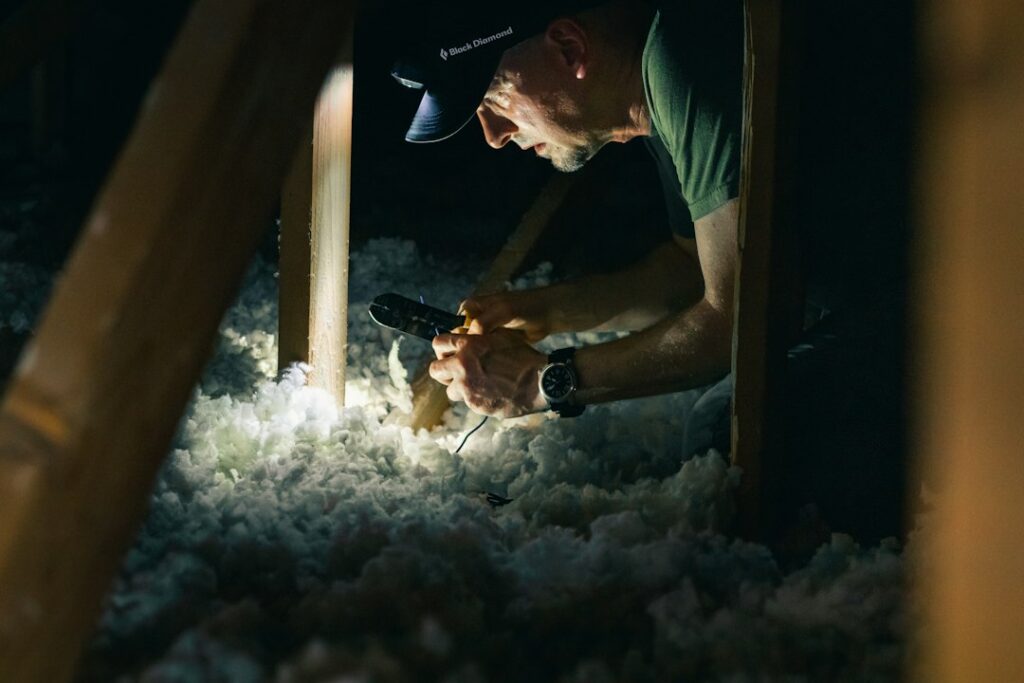
Start with an attic inspection from a safe, accessible location. Look for insulation depth and consistency, moisture evidence, blocked vents, unsealed penetrations, and the condition of the attic hatch.
A winter comfort problem may show up as cold upper rooms, high heating use, drafts near ceiling fixtures, or recurring ice buildup. A summer problem may appear as overheated bedrooms, large temperature differences between floors, or an attic that remains excessively hot.
The roof’s energy performance is best understood as part of the whole building envelope. In the local climate, a dry attic, continuous insulation, controlled air leakage, and functioning ventilation provide a stronger foundation for comfort and roof durability than any single roofing material or isolated upgrade.
